

Villa del Cardinale
THE HISTORY OF THE VILLA
Rocca di Papa


History, Myth, and the Birth of a Magical Place
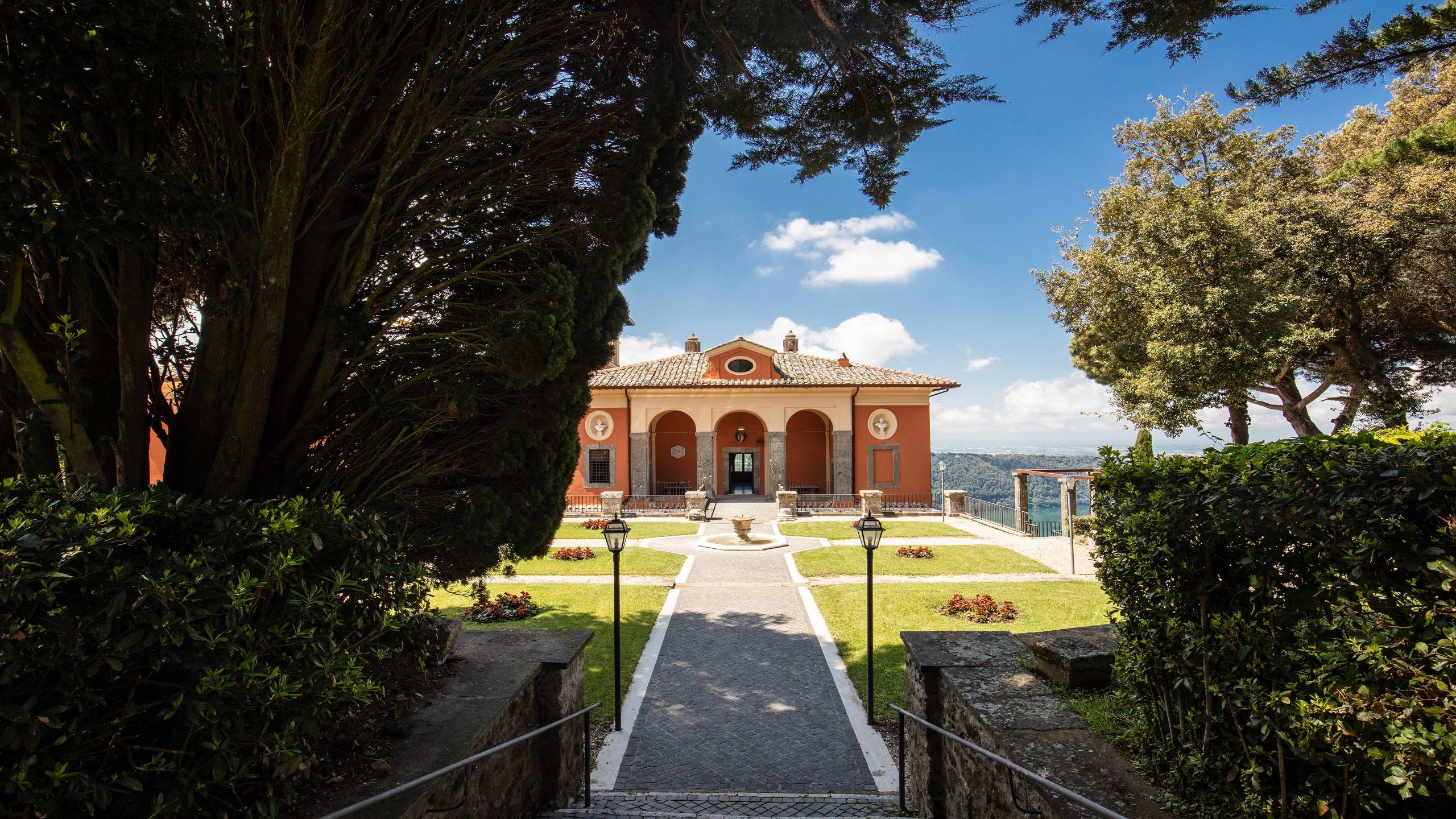
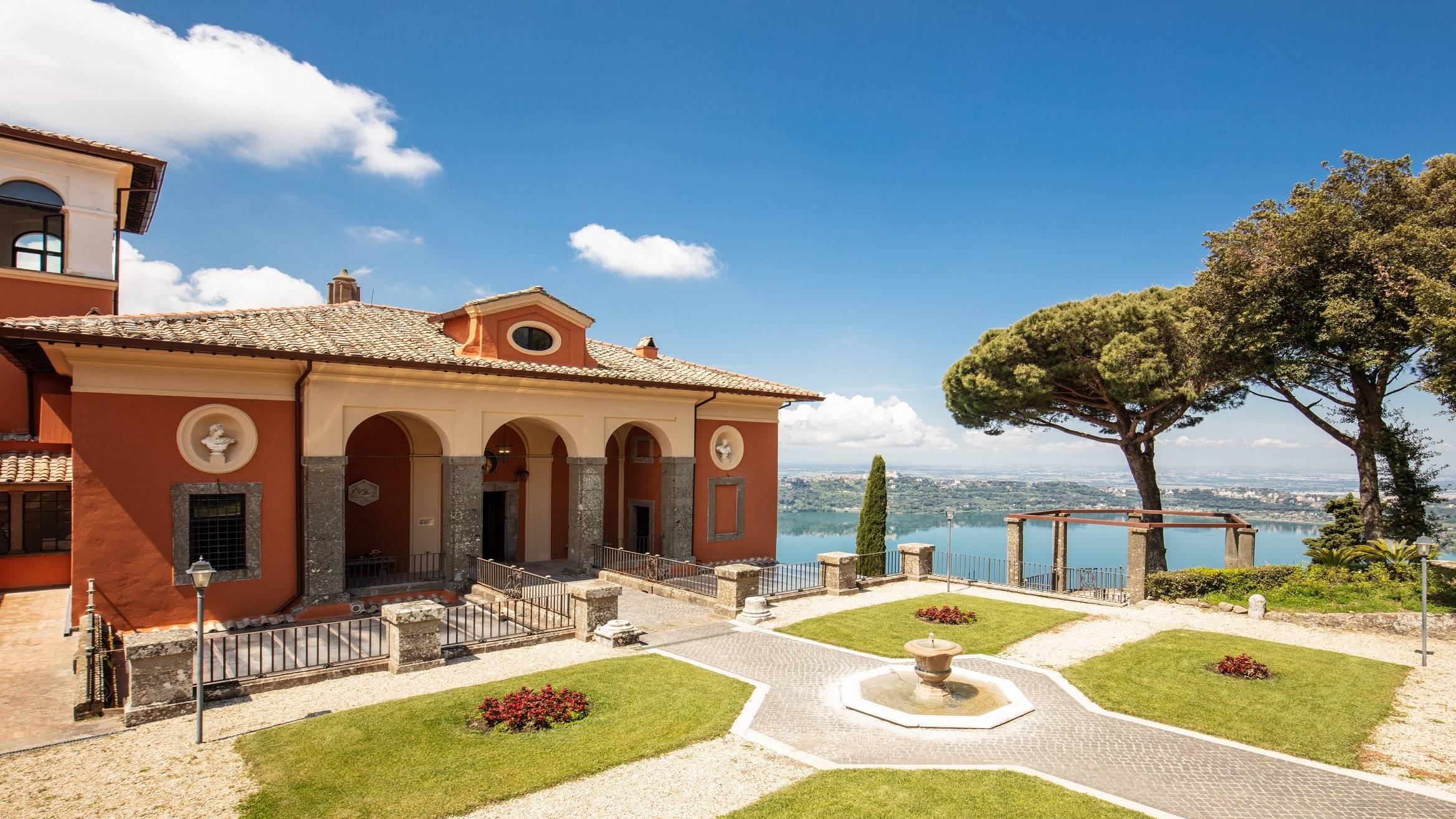
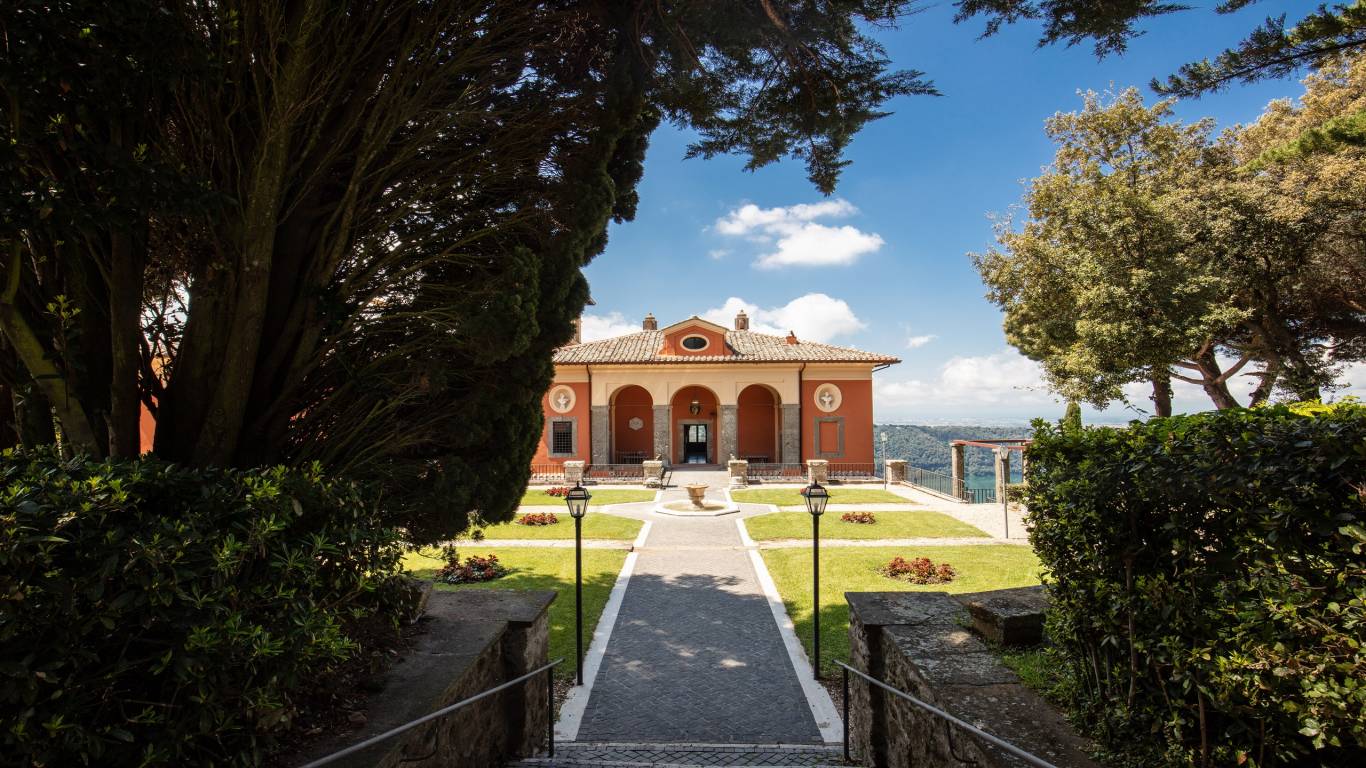
Villa del Cardinale, built in the 17th century as a hunting lodge, dominates the highest point of the crater of Lake Castel Gandolfo. Its privileged location is near the area that scholars believe may coincide with ancient Alba Longa, the mythical city founded by Ascanio, the son of Aeneas.
Nestled in the stunning landscape of the Alban Hills, the Villa represents a place of extraordinary historical and cultural value, linking its origin to the Roman aristocratic tradition and the grandeur of 17th-century residences.
FROM ALBA LONGA TO THE FOUNDATION OF ROME
BETWEEN HISTORY AND LEGEND
Myth tells that Ascanio, son of Aeneas, after the fall of Troy (12th century BC), founded the city of Alba Longa on the shores of Lake Albano, the beating heart of the Alban Hills. The mountain range is made up of the caldera and internal cones of the ancient Lazial Volcano, dormant for 5000 years, around which the Castelli Romani area developed.
Alba Longa led the Latin League, an alliance of cities from the Latium Vetus, whose symbolic center was the sanctuary of Iuppiter Latialis, built on the summit of Mount Albano (today's Monte Cavo). Every year, representatives of the League would gather to celebrate the Feriae Latinae, festivals dedicated to Jupiter Laziale: walking in procession along the Sacred Way, they ascended Mount Albano and, upon reaching the temple of the deity, sacrificed a great white bull to renew their alliance.
For centuries, the descendants of Aeneas peacefully succeeded each other on the throne of Alba Longa, consolidating the city's dominance over Ancient Lazio. However, upon the death of King Proca, the legitimate heir Numitor was dethroned by his brother Amulius, who, to protect his reign, killed Numitor's male children and forced his only daughter, Rea Silvia, to become a Vestal. However, the priestess, seduced by the god Mars, broke her vow of chastity and gave birth to twins: Romulus and Remus.
Kidnapped and abandoned on the Aniene River by Amulius' orders, the twins were saved and suckled by the legendary she-wolf, before being taken in and raised by a couple of shepherds: Faustulus and Acca Larentia. When Romulus and Remus, now adults, discovered their noble origins, they decided to intervene to dethrone Amulius and restore the throne of Alba Longa to their grandfather Numitor. After killing Amulius and restoring the kingdom to the rightful successor, the twins were granted permission to found a new city on the banks of the Tiber River: Rome.
THE BIRTH OF THE CASTELLI ROMANI
Starting from the late republican era (1st century B.C.), the beauty of the territory and its proximity to the City of Rome favored the proliferation of residential homes throughout the Colli Albani area, and particularly around the Lake Albano. In the 1600s, when the Apostolic Palace of Castel Gandolfo was completed and Pope Urban VIII chose it as his summer residence, noble families of Rome at the Pope's court built their own "castles" on the ruins of ancient patrician villas.
The same Villa del Cardinale, built by the Colonna family, stands on the remains of a Roman domus that, according to historical sources, hosted consuls and military commanders during the celebration of the Feriae Latinae, the ancient festivals instituted by the Latin League that Rome continued to honor.
Among the precious artifacts from the classical era found in the park of the Villa, special mention must be made of the rock tomb attributed to the Consul Gnaeus Scipio Ispalo. The tomb, carved into a cliff above Lake Castel Gandolfo, is characterized by a sculpted facade featuring twelve fasces and a curule chair, symbols of the executive and judicial powers exercised by Roman consuls.
The Villa, as we know it today, was built in 1629 at the behest of Cardinal Gerolamo Colonna: born in 1604 to Filippo Colonna and Lucrezia Tomacelli Cybo, Gerolamo was appointed Cardinal at the age of twenty-three. When his sister Anna married Taddeo Barberini, Pope Urban VIII, Taddeo's uncle, gifted Anna the land on which Gerolamo built his Residence. The project was entrusted to the architect Antonio Del Grande, who later oversaw the renovation of the Palazzo Colonna in Rome.
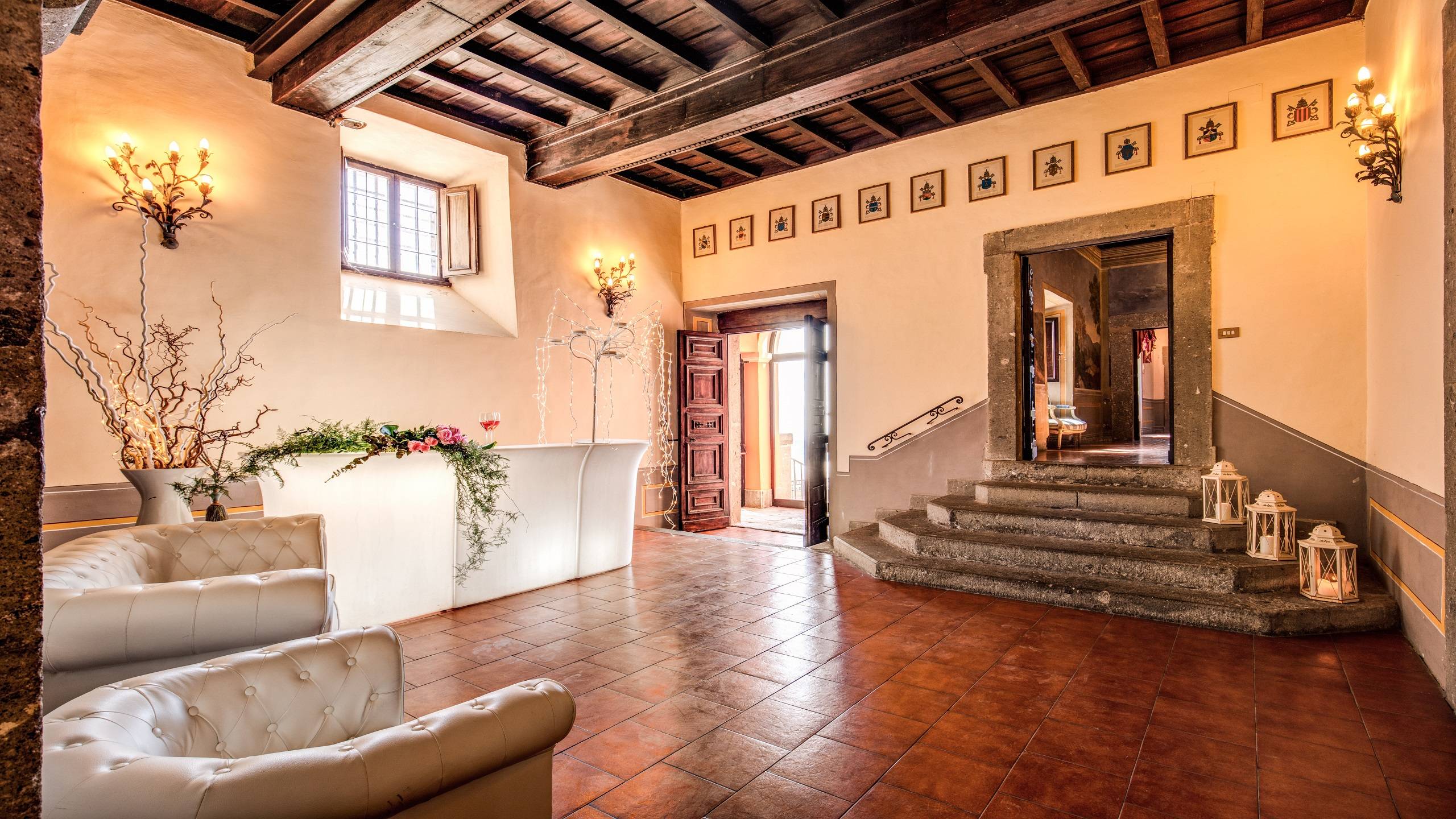
The Villa del Cardinale features late Renaissance architectural traits with Mannerist elements. This is evident in the three-arched entrance facing the Italian Garden and the intimate, enclosed atmosphere of the interiors, in stark contrast to the openness and the view of the exterior spaces: a dichotomy between light and shadow, soul and reason, typical of the seventeenth century.
The one who opened the doors of Villa Colonna and began its centuries-old hospitality was the third son of the family: Archbishop Egidio Colonna.
In his youth, the Prince was involved in an episode that Manzoni drew inspiration from while writing “The Betrothed”. It is said that Prince Egidio, then Carlo, changed his name and took the vows after causing the death of Prince Caetani, and that Manzoni drew from this incident when creating his famous Fra Cristoforo.
Thanks to the hospitable spirit of Egidio Colonna, the Villa del Cardinale quickly became a venue for grand events held in honor of the Pontifical Court of Castel Gandolfo. Among the most illustrious guests of the Villa, Pope Alexander VII Chigi is remembered, who gave Egidio Colonna the ancient sundial that marks the time on the tower. The inscription beneath the sundial reads horas non numero nisi serenas (I count only the serene hours), referring to the pleasant moments spent by the Pope in the Residence. The countless festivities held in his honor encouraged the construction of the so-called Via Alessandrina, a panoramic route immersed in the woods along the lakeside that still connects the Villa del Cardinale to the Pontifical Palace of Castel Gandolfo.